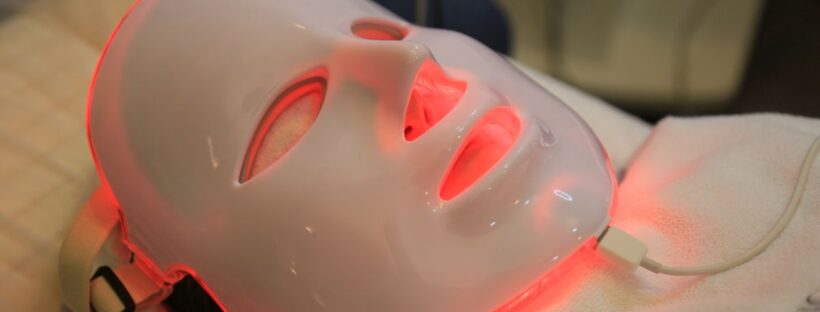
Close-up of an LED light therapy mask used for skincare and acne treatment

Red Light, Blue Light, and Acne: What the Science Actually Says

Two colors of light, two different jobs. Here is what they can do for breakouts, what they cannot, and how to use them well.

If you have searched for a drug-free way to calm breakouts, you have probably seen LED masks and panels sold for acne. LED stands for light-emitting diode, the small bulbs that make the light. The claims can sound too good to be true. So let us look at what the research really shows.

The short version is hopeful but honest. Light therapy can help mild to moderate acne. It is gentle and safe for most people. But it is not a magic switch, and it is not right for every kind of breakout. Here is how to think about it.

Two colors, two jobs

Most acne devices use two colors of light. Each one does a different thing.

Blue light does the cleaning. Acne is driven in part by a skin bacteria called Cutibacterium acnes. This bacteria makes tiny molecules called porphyrins. Think of porphyrins as little targets inside the bacteria. Blue light near 415 nm hits those targets and sets off a chemical reaction. That reaction makes reactive oxygen, which damages the bacteria from the inside. In plain terms, blue light helps kill the germs that feed a breakout. (nm means nanometer, a way to measure the exact color of light.)

Red light does the calming. Red light near 633 nm goes a little deeper into the skin. It does not kill bacteria as well as blue light. Instead, it helps lower inflammation and supports healing. That means less redness and swelling around each pimple.

Put them together and you get a one-two effect. Blue light knocks back the bacteria. Red light calms the skin and helps it recover. This is why many studies and devices pair the two colors, and why combination devices tend to perform best.

What the at-home studies actually found

Here is where the news gets encouraging for people who want to treat acne at home.

In March 2025, JAMA Dermatology published a review that pooled six studies on at-home LED devices for acne. This kind of review, called a meta-analysis, combines many studies to get a clearer picture. The result was solid. On average, acne severity scores improved by about 46 percent. Inflammatory pimples, the red swollen kind, dropped by a similar amount. So did the non-inflamed bumps.

Just as important, the devices were safe. No serious side effects showed up. A few users had mild dryness, redness, or a little discomfort. That is a gentle safety record for a treatment you can use at home.

Two more points from the research are worth knowing. First, combination red-and-blue devices showed the greatest improvement, which fits the two-jobs idea above. Second, results took time. Most people saw change after about four to twelve weeks of steady use, not overnight.

The honest ceiling

Now the part a good consumer advocate will not skip. Light therapy has real limits.

It works best for mild to moderate inflammatory acne. That means red, tender pimples and pustules. If that is your skin, light is a reasonable tool to try.

It does much less for other types. The American Academy of Dermatology notes that visible light does not clear blackheads, whiteheads, or deep nodular acne. Blackheads and whiteheads are clogged pores, not a bacteria problem, so light has little to grab onto. Deep cysts and nodules sit too far down and are too inflamed for a home light to fix. 💡 If you have painful, deep, or scarring acne, see a dermatologist. Stronger options like prescription medicine may be needed, and treating early helps prevent scars.

Light therapy also works best as a helper, not a stand-alone cure. Most skin doctors use it alongside good basics like a gentle cleanser, a proven acne ingredient, and a steady routine. Think of the light as one part of a plan, not the whole plan.

How to use it like a skeptic

If you want to try an LED device, a few simple habits will give you the best shot.

Be consistent. The studies that worked used steady sessions over weeks. A common pattern is a few short sessions per week. Follow the maker’s directions, and give it a full four to twelve weeks before you judge it.

Pick a combination device when you can. Since red-and-blue units showed the biggest gains, a device with both colors is a smart default for breakouts.

Set fair expectations. Aim for fewer and calmer pimples, not perfect skin. A drop of around 40 to 50 percent in a couple of months is a realistic and worthwhile goal.

Keep your other care going. Do not drop a treatment that already helps you. Add the light on top of it, not in place of it.

Protect your eyes. Follow the eye guidance in the manual. Many people use the goggles that come with the device or simply keep their eyes closed.

The bottom line

Red and blue light therapy is one of the better-supported tools for mild to moderate acne. Blue light helps clear the bacteria. Red light calms the skin. Used steadily, at-home devices can cut breakouts by close to half, with very few side effects.

It is not a cure, and it is not for every kind of acne. But for the right skin, and used with patience and a sensible routine, it is a gentle option worth considering. As the devices and the research keep improving, the case for light as part of everyday acne care only looks stronger.

This article is for general information and is not medical advice. If your acne is painful, deep, or leaving scars, talk with a dermatologist about the best plan for you.
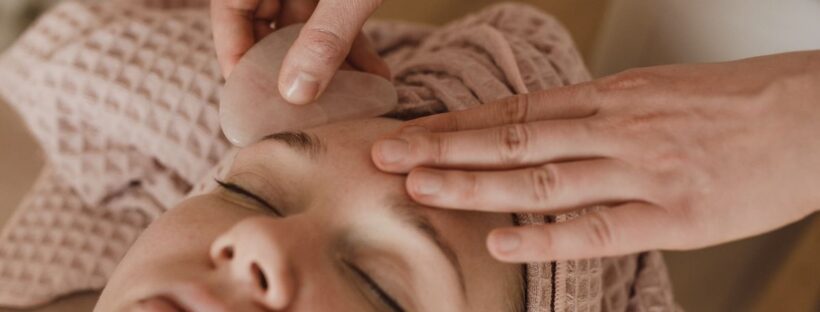
Woman receiving a relaxing facial skin treatment

Does Red Light Really Rebuild Collagen? What the Skin Studies Actually Measured

Skin rejuvenation is one of the most popular health-related goals for those who use red light therapy. There’s no shortage of ads promising fewer wrinkles and firmer skin from a glowing mask. But the marketing runs well ahead of the typical consumer’s knowledge. When a study says red light “boosts collagen,” what did the advertiser measure, and does it hold up to scientific scrutiny? The short version is encouraging. Skin is one of the few human organs where photobiomodulation has been tested through controlled trials with objective imaging rather than only before-and-after selfies. The longer version is where a smart shopper protects their money, because the gap between a well-run clinical protocol and a discount device is real.

They say light changes skin. Here’s how:

Most red light therapy devices make similar claims. Red and near-infrared wavelengths are absorbed by cytochrome c oxidase, an enzyme deep in the mitochondria that helps cells produce energy. Give a cell more usable energy and, the theory goes, it does its job better. In skin, the cells that matter most are fibroblasts, the workers in the dermis that manufacture collagen and elastin, the two proteins that keep skin firm and springy. But there’s a second half to the story that gets less attention. Aging and sun damage do not only slow collagen production, they also ramp up an enzyme called MMP-1 that breaks down existing collagen. Some laboratory work suggests red light around 660 nm both nudges fibroblasts to build more collagen and tamps down that collagen-degrading enzyme. If that holds, red light would be working on both sides of the ledger at once, which is a more interesting claim than “it just adds collagen.” Wavelength is not a marketing gimmick here. Red light in the roughly 630 to 660 nm range is absorbed mostly in the skin and upper dermis, exactly where fibroblasts live. This is why device manufacturers have leaned into skin health so aggressively. Near-infrared light around 830 nm travels deeper and is often paired with red in clinical protocols. For a face device, red wavelengths are doing most of the visible work.

The study people should actually cite

The most quoted piece of evidence in this space is a 2014 controlled trial by Wunsch and Matuschka. It matters because of how the researchers checked their results. They enrolled 136 people, ran treatments twice a week for weeks, and then measured intradermal collagen density with ultrasound imaging. This is a true clinical approach and is obviously far superior than survey-based, self-reported studies. An increase in collagen density reflects a structural change in the dermis, not a temporary plump from hydration or a flattering camera angle. Both light-treated groups showed statistically significant gains in collagen density and improvements in skin roughness against an untreated control. Blinded reviewers confirmed the visible changes. And yet the improvements were still present at a follow-up after treatment ended. Objective imaging, a control group, and blinded assessment together are what separate this from a testimonial. Other controlled trial work points the same direction. A randomized trial reported periocular wrinkle volume dropping by roughly 30 percent after red light treatment, and broader reviews of red LED phototherapy across dozens of studies and hundreds of patients continue to support its use for wrinkles and skin texture. The reduction figures vary study to study, wrinkles down by a quarter to a third, elasticity up by a smaller margin, which is honest and expected across different devices and protocols. This is a real effect of modest, gradual size, not a facelift.

Dose is the quiet variable that decides everything

Here is where consumer advocacy has to get specific. Two devices can both display “660 nm” on the box and deliver wildly different results, because wavelength tells you the color of the light, not how much of it reaches your skin. The number that matters is irradiance, the power density arriving at the surface, usually given in milliwatts per square centimeter. Multiply irradiance by time and you arrive at the dose, in joules per square centimeter, which is the figure the studies were actually built around. This is the honest reason a clinical-grade panel and a bargain mask are not equivalent. Professional in-office arrays generally push higher, more consistent output across a larger surface, so they hit an effective dose faster. Many inexpensive home masks run at lower power density, which doesn’t make them useless, but it does make them slower. A weak device is not a broken device, it is one that needs more sessions and more patience to reach the same total dose. So some very cheap units may never reach a meaningful dose at all in a comfortable session length. The encouraging news for people who prefer treating at home is that home devices have genuinely improved. Trials of commercial red and near-infrared LED face masks have reported meaningful gains, with one 12-week study showing wrinkles reduced by up to roughly 27 percent along with better elasticity and skin density. The realistic expectation for a decent home device is measurable improvement over about 4 to 12 weeks of consistent use, on the order of a few short sessions a week, not overnight change. Consistency beats intensity that you abandon.

A consumer’s checklist

If skin is the reason someone is considering red light therapy, a few questions protect both the wallet and the skin. Look for FDA clearance on a device that makes skin claims. It is not a promise of dramatic results, but it signals the product was reviewed for safety and basic effectiveness rather than simply shipped. Ask for real numbers. A company confident in its device will publish the wavelengths and the irradiance at a stated distance. Vague “clinical strength” language with no power density figure is a yellow flag. Set a calendar expectation, not a weekend one. The trials that showed structural collagen change ran for weeks of consistent sessions. A device tried twice and abandoned will do nothing regardless of quality. Mind the eyes, without panic. Red and near-infrared masks are not lasers and reputable safety reviews do not link them to retinal damage when used as directed, since the light is aimed at skin rather than into the eye. Even so, staring into any bright LED array is not comfortable or necessary, so closing the eyes or using the shielding the device provides is the sensible default, and a little extra caution matters more for devices that also emit blue light.

The honest bottom line

Skin is arguably the strongest consumer case for red light therapy, because it is one of the few claims backed by controlled trials that measured actual structural change with imaging rather than vibes. The effect is real and it is gradual and modest, a meaningful softening of fine lines and a measurable bump in collagen density, not a substitute for what a dermatologist can do with stronger tools. The technology is also still improving, and home devices that once lagged far behind clinic panels are closing the gap. For a consumer, the takeaway is not “does it work?” It is “did I buy a device with enough irradiance to reproduce what the studies did, and will I actually use it long enough to matter?” Answer those two honestly and red light therapy becomes one of the lower-risk, better-evidenced additions to a skin routine available today. This article is educational and is not medical advice. Red light therapy is not a replacement for care from a licensed dermatologist, especially for changing moles, persistent lesions, or any skin condition that needs a diagnosis.
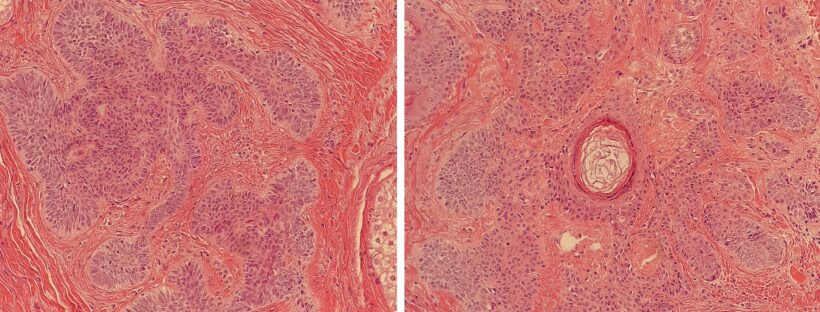
Histology micrograph of a hair follicle shown at two levels

Does Red Light Therapy Regrow Hair? What the Research Actually Shows

Few red light claims get shared more often than “it regrows hair.” Laser caps, combs, and helmet-style devices are everywhere, and the before-and-after photos are hard to ignore. So it is worth asking a plain question: when a healthy skeptic looks at the actual clinical research, does red light therapy hold up for hair loss? The short answer is encouraging, with important limits. Here is what the evidence says, and how to read it as a consumer rather than a customer.

How red light is supposed to help hair

Hair-focused devices use low-level laser or LED light, a practice usually called low-level laser therapy (LLLT) or, more broadly, photobiomodulation. The wavelengths that show up most in the research sit in two windows: roughly 650–670 nm in the visible red range, and about 810–850 nm in the near-infrared range. Light in these bands is absorbed by mitochondria inside the cells at the base of the follicle, which appears to nudge up ATP (cellular energy) production and trigger the release of nitric oxide. More nitric oxide can mean better microcirculation at the scalp, and the combined effect is thought to coax miniaturized follicles back toward the active growth (anagen) phase.

That mechanism points to the single most important limitation up front: light can only work on follicles that are still alive. In areas where follicles have already been fully lost, no amount of red light will bring them back. Red light therapy is a tool for slowing, stabilizing, and partially reversing thinning, not for resurrecting bald scalp.

Can a dead hair follicle be brought back to life?

Short answer: no. Once a follicle is truly dead it cannot be revived by red light, medication, or any other non-surgical treatment. But the word “dead” is where most confusion, and most marketing, lives, because the large majority of follicles people assume are dead are not dead at all.

Here is the distinction that matters. A truly dead follicle has lost the structures that make hair possible, chiefly its dermal papilla and its reservoir of stem cells, and the space it occupied is typically replaced by fibrotic, scar-like tissue. This is what happens in scarring (cicatricial) alopecias, and once that scarring is complete the biological machinery for regrowth is gone for good. No topical, light device, or supplement can rebuild it.

Androgenetic alopecia is different, and this is the encouraging part. It is a non-scarring form of hair loss. The follicles are not destroyed; they are miniaturized, shrinking over successive growth cycles into progressively finer, shorter hairs. Crucially, the stem cells in the follicle’s bulge are largely preserved until late in the process, even as the progenitor cells that build a thick terminal hair begin to falter. Because the essential cells are still present, a miniaturized follicle remains technically alive and, at least for a while, reactivatable. That is exactly the window in which red light, minoxidil, and finasteride can help.

There is, however, a point of no return. As miniaturization drags on, several changes can push a follicle past rescue: the arrector pili muscle (the tiny muscle that gives you goosebumps) can detach from the follicle, the dermal papilla can lose too many cells, and low-grade inflammation around the follicle can progress to fibrosis. Researchers describe a threshold — once an actively changing follicle’s hair diameter drops below roughly 50 micrometres — where the odds of reversing miniaturization become very low. Past that line, even a follicle that is not technically dead behaves as though it were.

The practical takeaway is simple and worth repeating: treatments like red light work on follicles that are alive but struggling, not on scalp where follicles are truly gone. That is why timing matters so much. The earlier you act while follicles are still viable, the more the science is on your side, and the more a tool like red light therapy has to work with.

What the clinical evidence actually shows

The research base for androgenetic alopecia (the common pattern hair loss in men and women) is now reasonably deep, and it is broadly positive.

A February 2025 systematic review and meta-analysis found that hair density increased significantly in people using LLLT compared with placebo, across treatment periods ranging from 4 to 26 weeks. The effect sizes were meaningful: a standardized mean difference of about 1.14 for shorter courses and 1.44 for longer ones, with benefits reported for both men and women and across device formats, including combs, helmets, and laser caps.

A 2025 network meta-analysis pooling 26 randomized controlled trials and 1,638 participants offered a useful reality check on how the treatments stack up. It found the strongest results came from combinations rather than red light alone: botulinum toxin plus red laser plus topical minoxidil ranked highest for increasing hair density, followed by red laser combined with LED and platelet-rich plasma (PRP), and red laser plus PRP. Real-world data backs the trend too, with one analysis of 1,383 patients reporting hair-density improvement in routine practice.

The honest summary from the wider literature: LLLT reliably nudges hair density and shaft diameter upward for many people, the effect is modest rather than dramatic, and reporting of device settings across studies is still inconsistent enough that researchers keep calling for better-standardized trials. Optimism is warranted; certainty is not yet.

Better together: red light and proven medications

One of the most practical findings for consumers is that red light appears to work best as a teammate, not a solo act. Reviews of combination therapy suggest LLLT paired with minoxidil can outperform either treatment alone. In one frequently cited example, LLLT combined with 2% minoxidil produced regrowth comparable to 5% minoxidil on its own, a helpful option for people who find higher-strength minoxidil irritating.

The logic is that these tools attack different parts of the problem. Finasteride reduces DHT, the hormone that drives follicle miniaturization. Minoxidil extends the growth phase and improves blood flow. Red light adds its own boost to follicular energy and circulation. Stacking mechanisms is generally where the best real-world outcomes show up, which is also why the head-to-head studies keep favoring combinations.

“FDA-cleared” is not the same as “FDA-approved”

Here is a distinction worth internalizing before you spend money. Many hair-growth light devices are marketed as FDA-cleared, and the first LLLT hair device cleared in the United States dates back to 2007. Cleared, though, is a lower bar than approved. FDA clearance (the 510(k) pathway) generally means a device is considered substantially equivalent to something already on the market and reasonably safe for its intended use. It is not the agency certifying that the product will regrow your hair. Approval, the stricter standard applied to most drugs, requires proof of effectiveness in a way clearance does not. When a device page leans on the word “cleared,” read it as “allowed to be sold,” not “proven to work.”

How to read a device like a consumer

Check the wavelength. Look for devices operating in the evidence-backed windows, roughly 650–670 nm red and/or 810–850 nm near-infrared. Vague “red light” claims without a stated wavelength deserve skepticism.

Check the dose and schedule. Clinical protocols typically involve short, regular sessions several times per week over months, not one dramatic treatment. A representative trial used 633 nm light for about 10 minutes, three times weekly, over six months. Consistency matters more than intensity.

Set a time horizon. Meaningful change in the studies takes months, commonly 16 to 26 weeks before results are assessed. If a device promises transformation in a couple of weeks, that promise is running ahead of the science.

Match the tool to the stage. Red light is best suited to thinning and miniaturized-but-active follicles. If loss is advanced and the scalp is smooth, a light device is unlikely to be the right investment, and a dermatologist consult is the better next step.

Safety and side effects

One genuine advantage of red light therapy for hair is its clean safety profile. Across the trials, LLLT is consistently well tolerated, with side effects that are rare and mild, most commonly minor scalp warmth, dryness, or temporary shedding early on. That favorable safety picture is a big part of why it is attractive as an add-on to medications, and why many people are comfortable using it long-term.

The bottom line

For androgenetic alopecia, red light therapy has moved from hopeful to genuinely supported: recent meta-analyses show real, if modest, gains in hair density, and the safety profile is excellent. It is most convincing when used consistently over months, on follicles that are thinning rather than gone, and alongside proven treatments like minoxidil or finasteride rather than in place of them. Manage expectations, favor devices that publish their wavelengths and protocols, and treat “FDA-cleared” as a starting question rather than a finish line. Used that way, it is one of the lower-risk, evidence-backed tools a consumer can add to a hair-loss plan.

A note on medical guidance: This article is educational and not medical advice. Hair loss can have many causes, and the right approach depends on your individual situation. Talk with a qualified clinician before starting any new treatment, especially if you are pregnant, nursing, taking medication, or managing a medical condition.

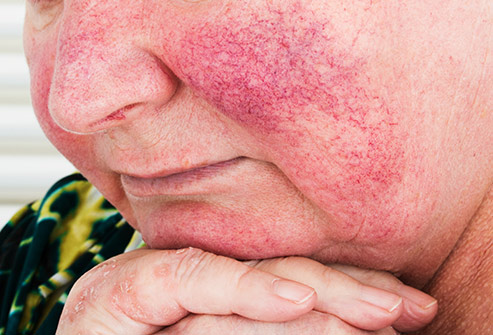
Red Light Therapy for Rosacea: Does It Work?

You don’t have to be a beauty-obsessed person to want clear skin on your face. One of the most annoying conditions to affect the appearance of your face is rosacea. Many rosacea sufferers wonder about red light therapy for rosacea. Indeed, almost everyone who suffers from this skin condition wants a safe remedy. Accordingly, red light therapy may be a great option.

Red light therapy for rosacea sufferers.

What is Rosacea?

The Mayo Clinic defines rosacea as an inflammation in facial skin. As a result, the face looks red and puffy. An affected person may have pus-filled bumps on their face. Awkward-looking blood vessels can appear just under the surface of the skin.

This annoying condition can affect anyone. But it most commonly affects fair-skinned, middle-aged women. It also affects smokers. In severe cases, it can lead to eye problems and an enlarged nose.

A number of factors can cause a rosacea outbreak, including foods and beverages (such as spicy foods and alcohol). Also, exposure to certain weather conditions like very hot or very cold temperatures, sunlight, or wind can trigger an outbreak. Sometimes even exercise, blood pressure medications, cosmetic products, and emotional changes cause a rosacea outbreak.

Can Red Light Therapy Reduce or Eliminate Rosacea?

Skin disorders have been studied by researchers for many years. Accordingly, many therapies have been evaluated as potential treatments. These include topical lotions, medications, and even photonics (light).

So why how does light therapy work? Well, “photoreceptors” are the molecules that receive light in skin tissue. These photoreceptors within skin cells absorb light. This, in turn, stimulates the production of ATP. ATP is the chemical that triggers repair activity within the cells. The energy released by ATP helps healthy cells reproduce while signaling to others that they should repair.

One clinical trial conducted by Massachusetts General Hospital involved treating acne sufferers with 635nm light. (Acne is a similar skin condition that affects the face.) People in the study ranged from 14 years of age up to 50 years of age.

In a separate study, people were treated with 590nm LEDs on half of their faces following laser skin resurfacing. The purpose of the study was to see if red light therapy reduces erythema, or redness in the face. Both conditions cause extensive reddening of facial skin.

Red Light Reduces Inflammation

Inflammation is generally the root cause of rosacea. Therefore, red light therapy delivers results through its ability to reduce inflammation.

Light has the ability to penetrate the skin and into the body. The depth of light penetration depends on its wavelength. Accordingly, red light can penetrate about 3/8 of an inch. In order to fully penetrate skin, 600nm to 700nm wavelengths of light are needed.

When enough photoreceptors absorb enough light, molecular events begin to occur. One type of molecular event is the production of ATP, or the energy-transmitting chemical within the cell.

ATP production starts the cellular processes that reduce rosacea symptoms.

The redness and sensitivity of your skin is because of inflamed tissue. As a result of exposure to red light, sufferers feel relief. Sensations like burning or itching subside.

Healing Cells Reproduce Faster

650nm red light also helps healing cells reproduce faster. Bumps, puffiness, and pus won’t go away unless healing cells are plentiful in the damaged area.

Cell Migration Increases

Damaged skin tissue needs to be repaired. And healthy cells need to reproduce. The presence of healthy cells repairs damaged areas more quickly. Red light can help increase the number of healthy cells in the area by moving them from other parts of the body.

There are many types of cells involved in healing tissue. For instance, two types of cells in the body that repair wounds are the HGF-1 and L929 cells. When cells travel to these areas, healing accelerates. Red light is clinically proven to stimulate this process.

Collagen Production is Stimulated

Collagen gives structure to your skin. It is an important protein that results in skin density. Think of it as a sticky, glue-like fiber that holds together tissue.

Red light therapy increases collagen density, according to a 2012 study conducted in Germany. So people who suffer from rosacea, acne, and other skin inflammation conditions might find that their skin looks AND feels better.

Benefits of Red Light Therapy for Rosacea

If you’ve read our beginner’s guide, then you know that we’re advocates of red light therapy for rosacea and a host of other skin conditions. If you’re considering using low level light as part of a healthier skin program, there’s not much downside other than time and cost.

But there’s a whole lot of upside.

  • Rapid relief from burning/itching. Results can be felt in minutes.
  • Potential to reduce the severity of future outbreaks. By keeping skin tissue healthy, it is less likely to overreact to future stimulants.
  • Look and tone of skin improves. When you reduce inflammation, redness goes away and natural color returns to the face.
  • Smoother feeling skin. Bumps and swollen skin give way to smoother, silkier texture.
  • Not a pharmaceutical. No one likes side effects and adverse reactions. These are the worst aspects of prescription drugs.
  • Non-contact, not a cream or lotion. Yes, even topical treatments can irritate skin!
  • Non-destructive. Ideally, the only thing that should destroy cells inside your body is your body’s own, natural immune system. Red light simply triggers this natural response.

Should You Try Red Light Therapy for Rosacea?

It is difficult to find reasons why you wouldn’t at least try treating your rosacea with some sort of a photonic therapy. The science isn’t new. The clinical results are published. The risks are low. And there are many benefits.

If you have used red light therapy for rosacea, please let us know in the comments. And be sure to join our Facebook group to share your experiences with others.