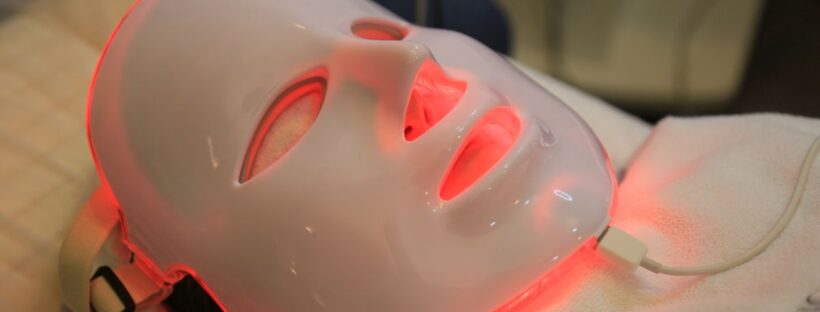
Two colors of light, two different jobs. Here is what they can do for breakouts, what they cannot, and how to use them well.
If you have searched for a drug-free way to calm breakouts, you have probably seen LED masks and panels sold for acne. LED stands for light-emitting diode, the small bulbs that make the light. The claims can sound too good to be true. So let us look at what the research really shows.
The short version is hopeful but honest. Light therapy can help mild to moderate acne. It is gentle and safe for most people. But it is not a magic switch, and it is not right for every kind of breakout. Here is how to think about it.
Two colors, two jobs
Most acne devices use two colors of light. Each one does a different thing.
Blue light does the cleaning. Acne is driven in part by a skin bacteria called Cutibacterium acnes. This bacteria makes tiny molecules called porphyrins. Think of porphyrins as little targets inside the bacteria. Blue light near 415 nm hits those targets and sets off a chemical reaction. That reaction makes reactive oxygen, which damages the bacteria from the inside. In plain terms, blue light helps kill the germs that feed a breakout. (nm means nanometer, a way to measure the exact color of light.)
Red light does the calming. Red light near 633 nm goes a little deeper into the skin. It does not kill bacteria as well as blue light. Instead, it helps lower inflammation and supports healing. That means less redness and swelling around each pimple.
Put them together and you get a one-two effect. Blue light knocks back the bacteria. Red light calms the skin and helps it recover. This is why many studies and devices pair the two colors, and why combination devices tend to perform best.
What the at-home studies actually found
Here is where the news gets encouraging for people who want to treat acne at home.
In March 2025, JAMA Dermatology published a review that pooled six studies on at-home LED devices for acne. This kind of review, called a meta-analysis, combines many studies to get a clearer picture. The result was solid. On average, acne severity scores improved by about 46 percent. Inflammatory pimples, the red swollen kind, dropped by a similar amount. So did the non-inflamed bumps.
Just as important, the devices were safe. No serious side effects showed up. A few users had mild dryness, redness, or a little discomfort. That is a gentle safety record for a treatment you can use at home.
Two more points from the research are worth knowing. First, combination red-and-blue devices showed the greatest improvement, which fits the two-jobs idea above. Second, results took time. Most people saw change after about four to twelve weeks of steady use, not overnight.
The honest ceiling
Now the part a good consumer advocate will not skip. Light therapy has real limits.
It works best for mild to moderate inflammatory acne. That means red, tender pimples and pustules. If that is your skin, light is a reasonable tool to try.
It does much less for other types. The American Academy of Dermatology notes that visible light does not clear blackheads, whiteheads, or deep nodular acne. Blackheads and whiteheads are clogged pores, not a bacteria problem, so light has little to grab onto. Deep cysts and nodules sit too far down and are too inflamed for a home light to fix. 💡 If you have painful, deep, or scarring acne, see a dermatologist. Stronger options like prescription medicine may be needed, and treating early helps prevent scars.
Light therapy also works best as a helper, not a stand-alone cure. Most skin doctors use it alongside good basics like a gentle cleanser, a proven acne ingredient, and a steady routine. Think of the light as one part of a plan, not the whole plan.
How to use it like a skeptic
If you want to try an LED device, a few simple habits will give you the best shot.
Be consistent. The studies that worked used steady sessions over weeks. A common pattern is a few short sessions per week. Follow the maker’s directions, and give it a full four to twelve weeks before you judge it.
Pick a combination device when you can. Since red-and-blue units showed the biggest gains, a device with both colors is a smart default for breakouts.
Set fair expectations. Aim for fewer and calmer pimples, not perfect skin. A drop of around 40 to 50 percent in a couple of months is a realistic and worthwhile goal.
Keep your other care going. Do not drop a treatment that already helps you. Add the light on top of it, not in place of it.
Protect your eyes. Follow the eye guidance in the manual. Many people use the goggles that come with the device or simply keep their eyes closed.
The bottom line
Red and blue light therapy is one of the better-supported tools for mild to moderate acne. Blue light helps clear the bacteria. Red light calms the skin. Used steadily, at-home devices can cut breakouts by close to half, with very few side effects.
It is not a cure, and it is not for every kind of acne. But for the right skin, and used with patience and a sensible routine, it is a gentle option worth considering. As the devices and the research keep improving, the case for light as part of everyday acne care only looks stronger.
This article is for general information and is not medical advice. If your acne is painful, deep, or leaving scars, talk with a dermatologist about the best plan for you.